
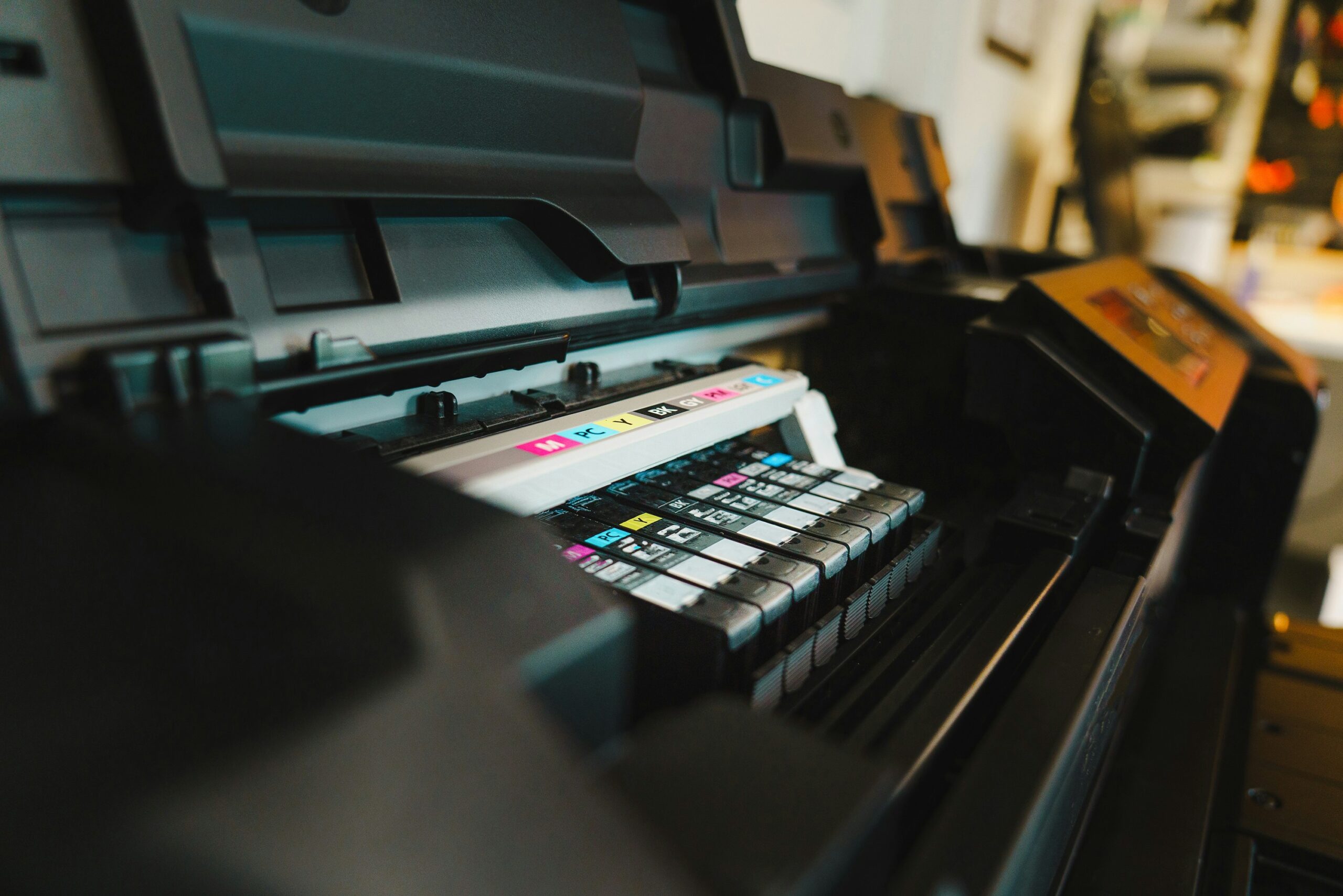
Printer ink can be surprisingly expensive. When it is time to replace a cartridge, you might find a genuine manufacturer’s cartridge sitting next to a compatible alternative costing considerably less.
So, is genuine ink worth paying extra for? Are compatible cartridges safe to use? And can cheaper ink actually damage your printer?
There isn’t one answer that is right for everybody. Good compatible cartridges can save money, while genuine cartridges generally offer the most predictable experience. The right choice depends on your printer, what you print and how important reliability and print quality are to you.
What Is Genuine Printer Ink?
Genuine ink cartridges are made or supplied by the manufacturer of your printer. They are sometimes described as OEM cartridges, meaning Original Equipment Manufacturer.
They are designed specifically for the printer and are normally the option against which the manufacturer has tested things such as print quality, ink levels and reliability.
What Is Compatible Printer Ink?
A compatible cartridge is made by a different company but designed to work in your printer. It isn’t necessarily fake or counterfeit: a legitimate compatible cartridge should make it clear that it is an alternative product.
Compatible cartridges vary enormously in quality. Some come from established suppliers with good quality control and warranties; others are extremely cheap products from unknown sellers where consistency may be more of a gamble.
Why Is Genuine Ink So Expensive?
One frustration of owning an inkjet printer is that replacement ink can sometimes feel disproportionately expensive compared with the original cost of the printer.
Printer manufacturers often sell relatively affordable printers and then make ongoing revenue from consumables. Genuine cartridge pricing also reflects development, manufacturing, distribution and support costs.
This is why compatible cartridges are popular: the potential saving can be substantial, particularly for households that print regularly.
Are Compatible Ink Cartridges Safe?
A reputable compatible cartridge designed for the correct printer should generally be safe to use. However, “compatible” covers a very broad range of products.
We would be much happier using cartridges from an established supplier than buying the absolute cheapest unbranded multipack from an unknown marketplace seller.
Poor-quality cartridges can potentially leak, produce inconsistent results or simply fail to work correctly.
So the real comparison isn’t always genuine versus compatible. Sometimes it is genuine versus good compatible versus very cheap compatible.
Will Compatible Ink Damage My Printer?
Using a compatible cartridge does not automatically damage a printer. That said, a badly manufactured or leaking cartridge can cause problems, just as any faulty consumable can.
If ink leaks inside the machine, cleaning it can be difficult and in some cases the resulting problem may not be economical to repair. This is one reason we wouldn’t choose cartridges purely by finding the lowest possible price.
What About Print Quality?
For ordinary home documents, homework, recipes, tickets and occasional colour printing, a good compatible cartridge may produce results that are perfectly acceptable.
Where genuine ink tends to have an advantage is consistency. If accurate colours, photographs or high-quality presentation materials matter, genuine cartridges may be the safer choice because the printer, ink and sometimes paper have been designed to work together.
For somebody printing a boarding pass, the difference may be irrelevant. For somebody producing photographs they want to keep, it may matter considerably more.
Can Compatible Ink Fade More Quickly?
It can. The formulation of the ink affects how prints respond to light, moisture and age. Compatible ink quality varies, so photographs or documents intended for long-term display or storage may not behave identically.
If you’re printing important photographs that you want to keep for many years, we would give more consideration to genuine ink and suitable photo paper.
Why Doesn’t My Printer Recognise a Compatible Cartridge?
Modern ink cartridges can contain electronic chips that communicate with the printer. This allows the printer to identify cartridges and estimate things such as remaining ink, but it can also mean some third-party cartridges are not recognised correctly.
You might see messages such as “cartridge not recognised”, “incompatible cartridge”, “cartridge problem” or “non-genuine cartridge detected”. Sometimes the cartridge will still work after acknowledging a warning; in other cases it may not.
Printer firmware updates can also affect compatibility with some third-party cartridges.
What Are Printer Firmware Updates?
Your printer contains software of its own, known as firmware. Manufacturers can update it to fix faults, improve security or change how the printer operates.
Because cartridges communicate electronically with many modern printers, firmware changes can occasionally cause difficulties with third-party cartridges. That doesn’t mean you should automatically avoid updates, but it can explain why a compatible cartridge suddenly behaves differently.
Will Compatible Ink Affect My Printer Warranty?
Simply using a third-party consumable does not automatically mean that every warranty right disappears. However, if a non-genuine cartridge actually causes damage, the situation can be different from an unrelated fault with the printer.
If your printer is new and still under warranty, read the manufacturer’s warranty terms before choosing third-party consumables.
What About Refilled Cartridges?
Refilled cartridges are slightly different. Rather than manufacturing a completely new compatible cartridge, an existing cartridge is cleaned and filled with replacement ink.
This can reduce waste and may save money, but quality again depends heavily on the supplier and condition of the cartridge. Some printers may also continue to report an old or inaccurate ink level.
Is Cheap Ink Always Cheaper in the Long Run?
Not necessarily. If a compatible cartridge costs half as much and works perfectly, the saving is straightforward.
But a cartridge isn’t good value if you need repeated cleaning cycles, throw it away because the printer won’t recognise it or replace it much sooner than expected.
It is better to think about cost per useful print rather than just the price on the cartridge box.
Check Standard and High-Capacity Cartridges
Many printers offer both standard and higher-capacity cartridges, often described as XL or high-yield versions. The larger cartridge costs more initially but may offer a lower cost per page if you print regularly.
Don’t assume the cheapest cartridge on the shelf is therefore the cheapest way to run the printer.
What If You Hardly Ever Print?
For occasional users, the biggest problem may not be the price of ink at all. Inkjet printers can suffer from dried ink and blocked print heads when left unused for long periods, and cleaning cycles consume even more ink.
If you print only a handful of black-and-white documents every few months, a mono laser printer can sometimes make more sense than an inkjet.
When Would We Choose Genuine Ink?
- The printer is relatively new and you want the most predictable experience.
- Print quality and colour accuracy are particularly important.
- You print photographs that you want to keep.
- The printer has previously been troublesome with compatible cartridges.
- You want to minimise the chance of cartridge compatibility warnings.
When Can Compatible Ink Make Sense?
- You do a lot of ordinary home printing.
- The saving compared with genuine cartridges is significant.
- Perfect colour accuracy isn’t important.
- The printer is older and outside its warranty period.
- You are buying from a supplier you trust.
We wouldn’t dismiss compatible cartridges simply because they aren’t made by the printer manufacturer.
Frequently Asked Questions
Is genuine printer ink always better?
Genuine ink generally offers the most predictable compatibility and consistency, but that doesn’t mean everybody needs to buy it. A good compatible cartridge can be perfectly suitable for everyday home printing.
Why does my printer warn me that I’m using non-genuine ink?
Many printers can identify the electronic chip fitted to a cartridge. The warning may simply be informing you that the cartridge wasn’t supplied by the printer manufacturer, although you should read the message carefully.
Can I mix genuine and compatible cartridges?
Some printers will work with a mixture, but compatibility varies. If unusual print or recognition problems start after changing cartridges, the consumables are one of the first things worth checking.
Are compatible cartridges the same as counterfeit cartridges?
No. A legitimate compatible cartridge is openly sold as a third-party alternative. A counterfeit product attempts to imitate the genuine manufacturer’s product and mislead you about what you’re buying.
Should I buy the cheapest compatible ink I can find?
We wouldn’t recommend choosing purely on price. Look for an established supplier, clear compatibility information, good reviews and some form of guarantee if the cartridge doesn’t work correctly.
Our Advice
There is nothing inherently wrong with choosing compatible printer ink, and for many home users a reputable compatible cartridge can offer worthwhile savings.
Equally, genuine ink isn’t simply a waste of money. You’re generally paying for predictable compatibility, consistent quality and a product specifically designed for the printer.
The sensible choice depends on what you print, how often you print and how much you value the saving compared with convenience and consistency.
Having Printer Problems?
If your printer isn’t recognising cartridges, keeps going offline, won’t connect to Wi-Fi or simply refuses to print when you need it, Barwell Computer Repair can help.
We provide straightforward printer and technology support for home users, without expecting you to know the technical terminology first.


 Computer & Laptop Repairs
